
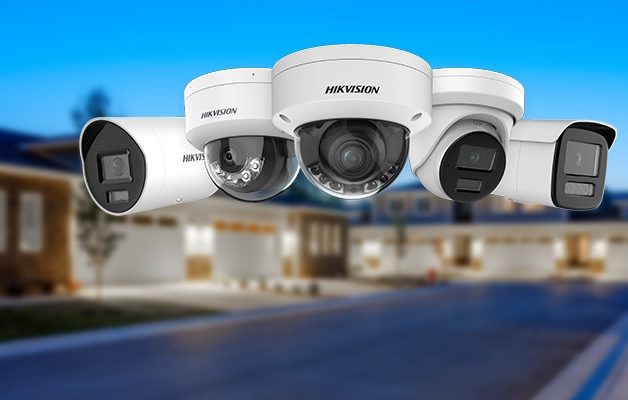
What video analytics changes
Traditional surveillance gives a team recorded footage and live views. Analytics adds rules that can highlight selected events: movement across a boundary, a vehicle at an entrance, occupancy above a threshold or unusual activity in a defined area.
That does not make every camera intelligent in every situation. Accuracy and usefulness depend on the chosen hardware, viewing angle, lighting, environment and configuration.
Begin with a response question
Before selecting equipment, ask: if the system identifies this event, who receives it and what should they do? An alert without an owner creates more noise. A well-designed workflow defines the event, verifies it and gives the responsible person enough context to act.
Common use cases
Perimeter and intrusion awareness
Analytics can help highlight movement across defined boundaries or into restricted areas, supporting faster review by a security team.
Vehicle and entrance management
Suitable systems can support vehicle classification, number-plate workflows and records of entry and exit. Performance should be assessed for the gate layout, speed, angle and lighting.
Retail and people flow
Occupancy and movement information may help managers understand queues, busy periods and how people use a space. This operational use should be separated from identity-based surveillance unless there is a clear, lawful reason.
Safety and operational events
In industrial, healthcare or logistics environments, selected analytics may help teams notice activity that requires verification. The implementation must match the specific environment and risk.
Plan for Ugandan operating conditions
Power stability, connectivity, heat, dust, rain, night lighting and remote-site support can all affect the design. The solution should continue providing essential recording and local operation when external connectivity is unavailable.
Privacy and responsible access
Define why footage is collected, who can view it, how long it is retained and how exports are controlled. Use the least intrusive capability that meets the operational need, place clear notices where appropriate and review applicable privacy obligations.
A useful implementation checklist
- Define the event and required response
- Survey the real site at relevant times of day
- Choose cameras and analytics for that environment
- Set access, retention and escalation rules
- Test with realistic activity before acceptance
- Train operators to verify and respond
- Review false alerts and improve configuration